Infrastructure & Architecture
Designing a digital learning environment where students could use real AWS data tools without technical overhead or security risks.
To manage a program of this scale, I divided the work into three core areas:
Designing a digital learning environment where students could use real AWS data tools without technical overhead or security risks.
Establishing a scalable pipeline to turn complex AWS services into “fun” interactive units (e.g., Koalas in the Cloud).
Managing the lifecycle from Beta to General Availability (GA) across the US, UK, Australia, and Canada.
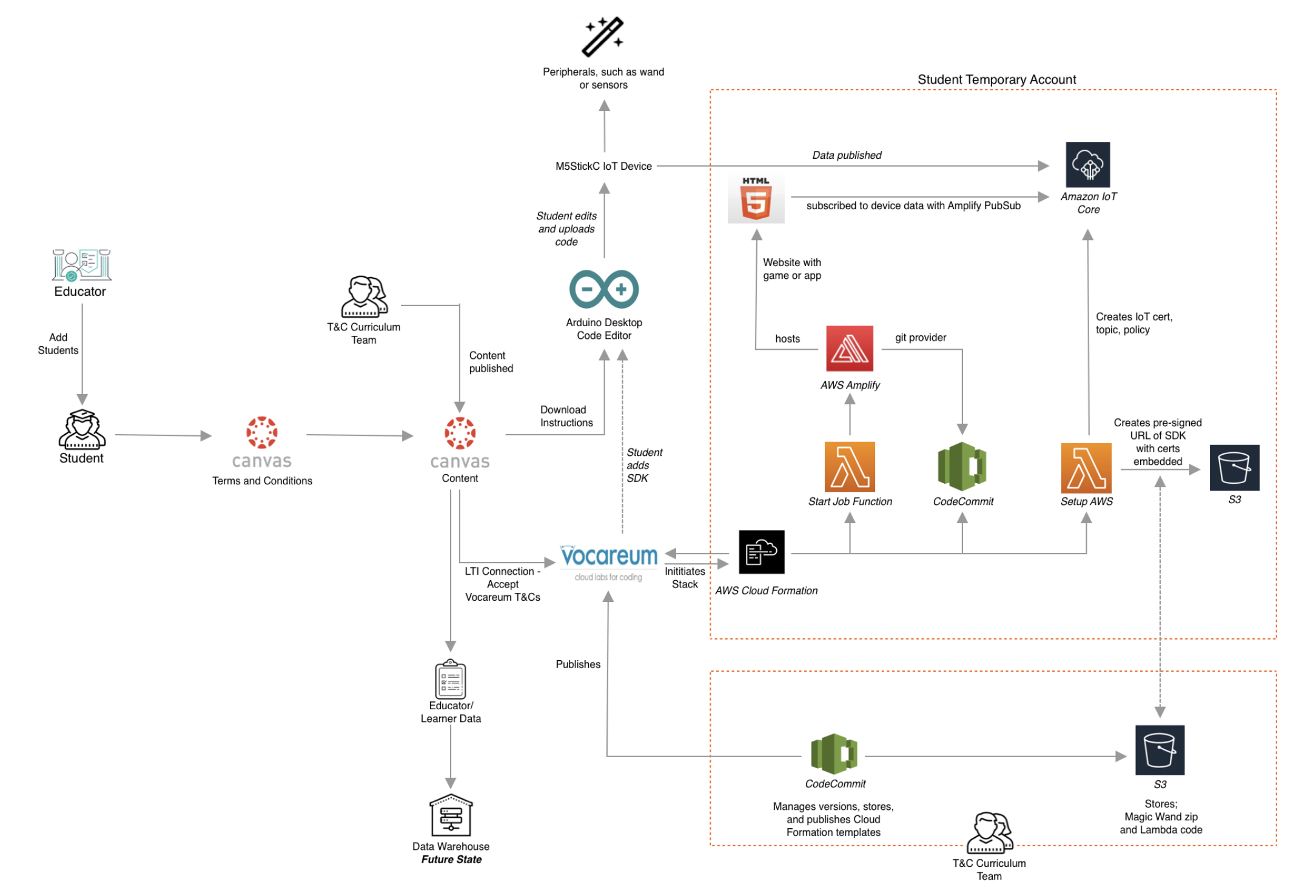
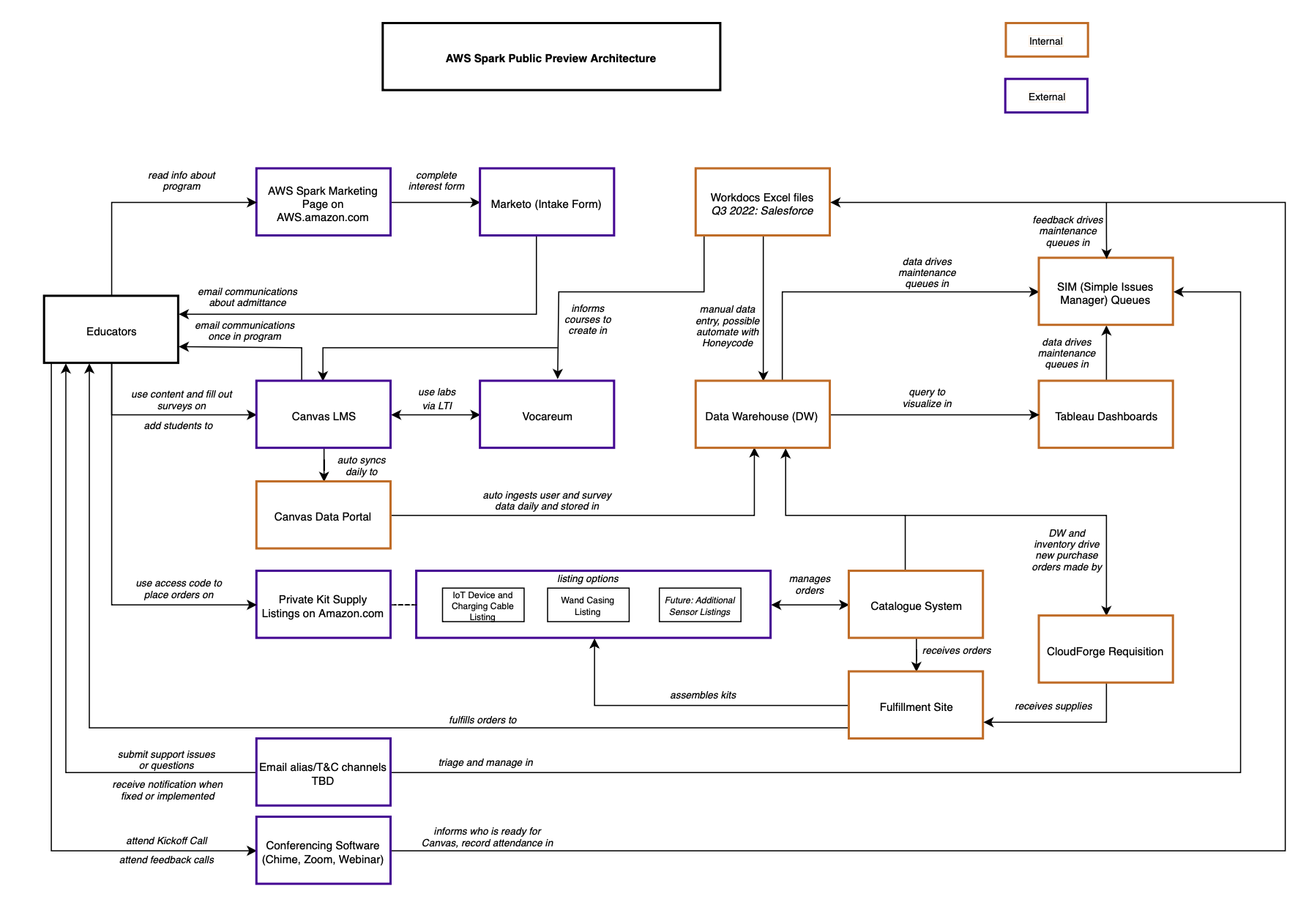
I grew the program from the ground up: I stood up a Canvas LMS, integrated Vocareum Labs as a scalable lab solution, and built AWS CloudFormation-powered AWS accounts for students to easily access interesting, real-world lab environments without the hassle or risk of full AWS accesss.
As the team and program expanded, this work included working with and managing internal software engineering teams, external software vendors, and standing up data pipelines to measure KPIs for the progam. I became well-versed in compliance requirements for minors using software tools in the US, Canada, UK, and Australia.
The curricular design for the program was based on three core principles: real-world applications, tied to student interest topics, and accessible for both educators and students.
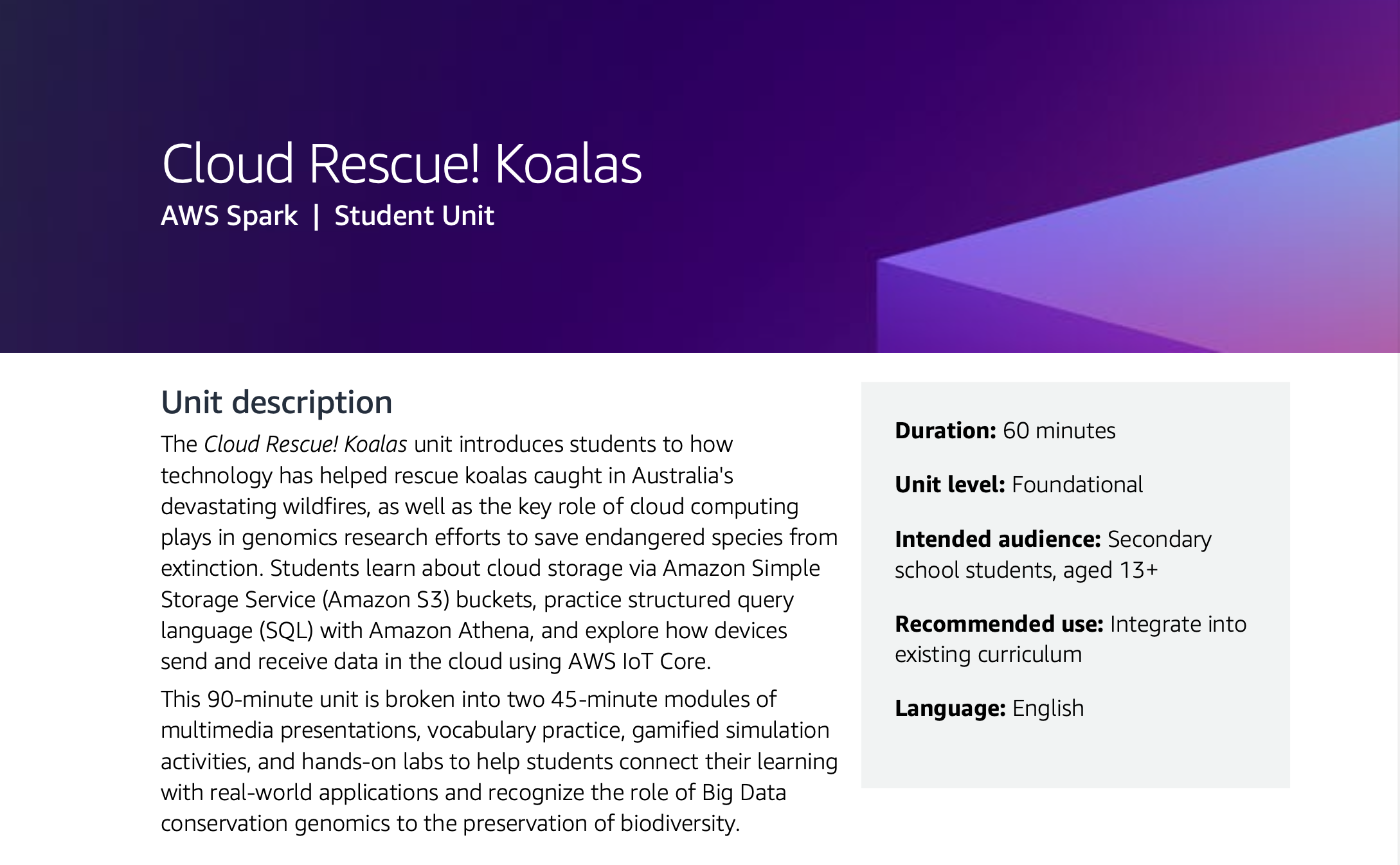
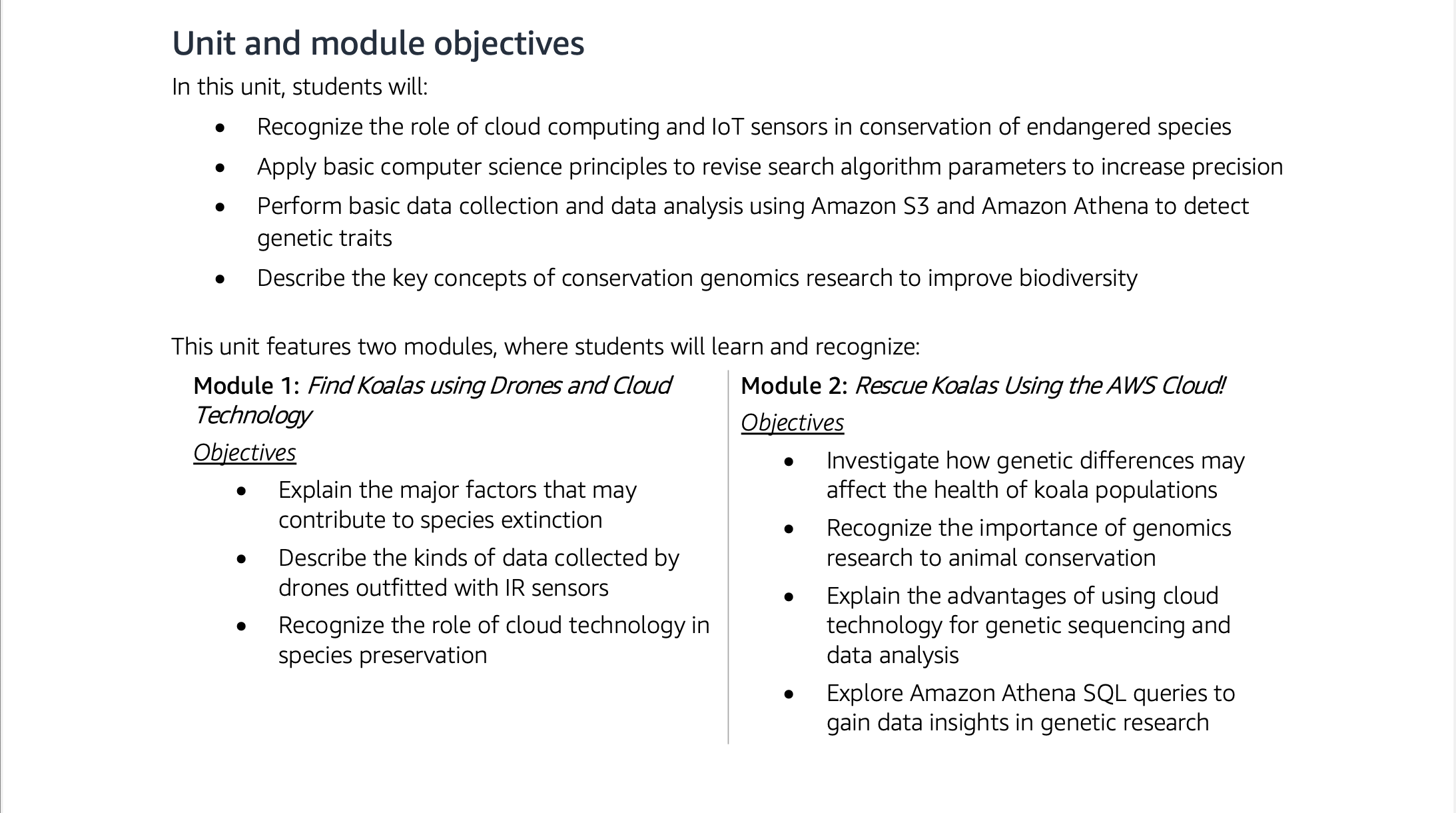
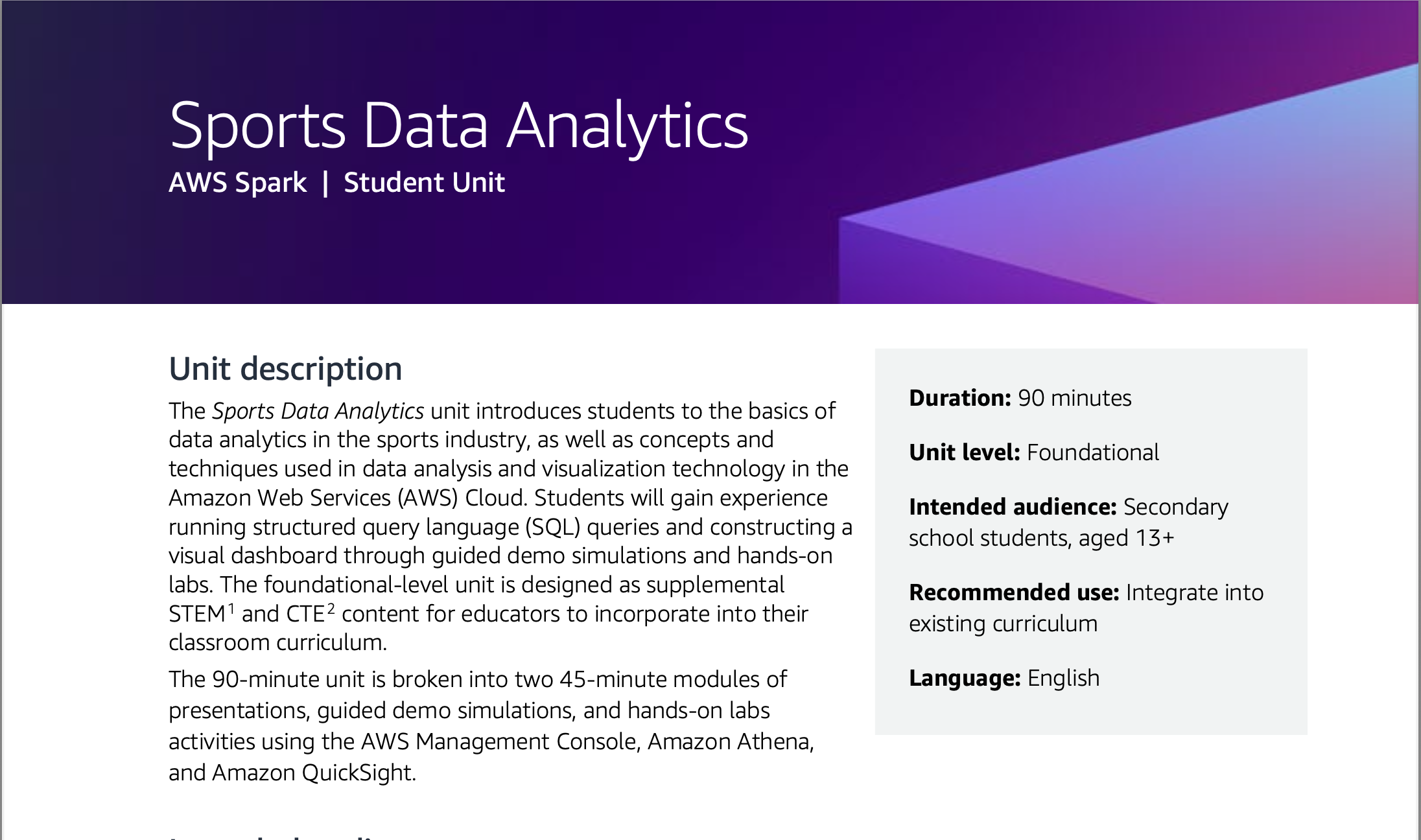
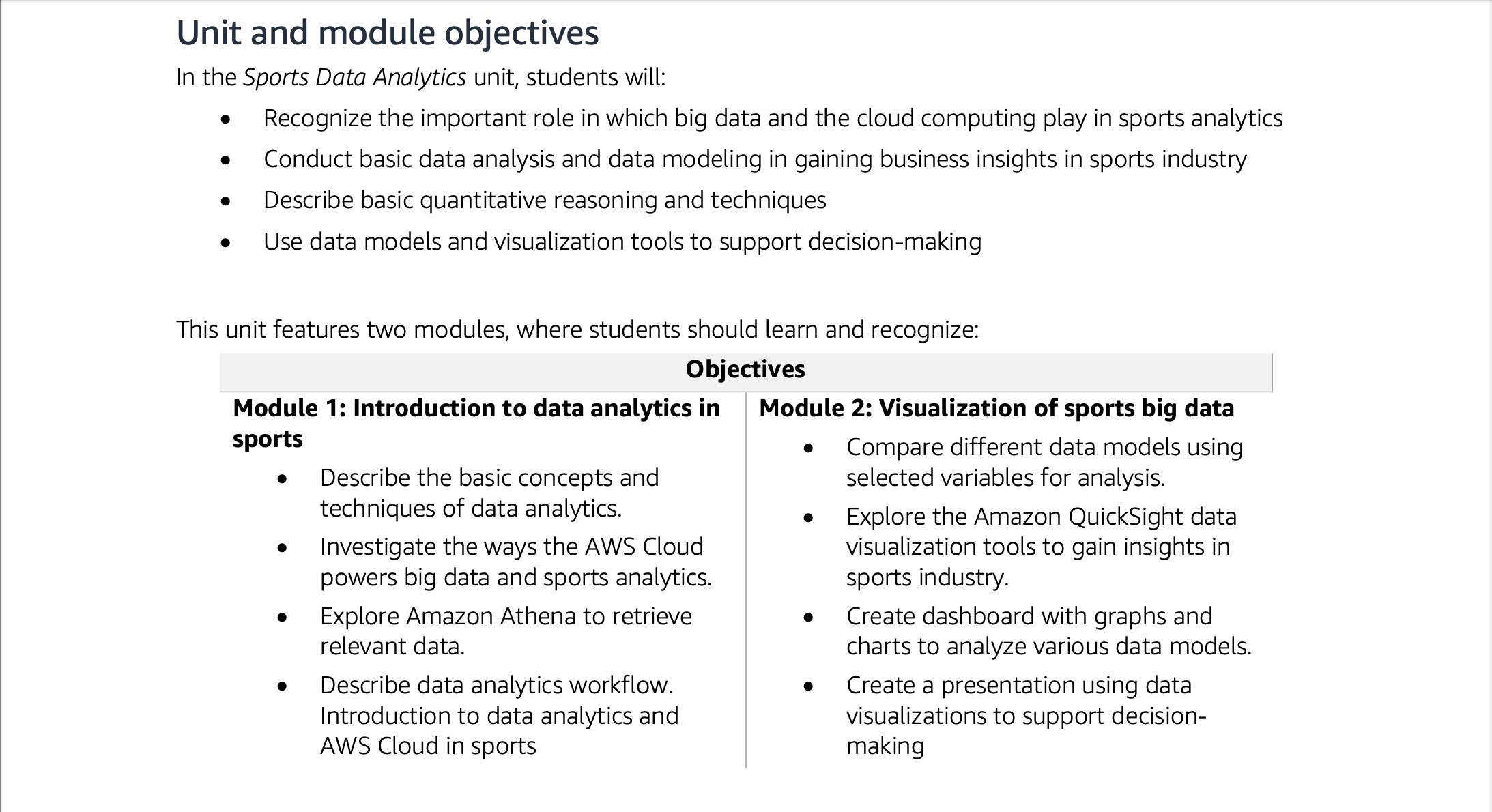
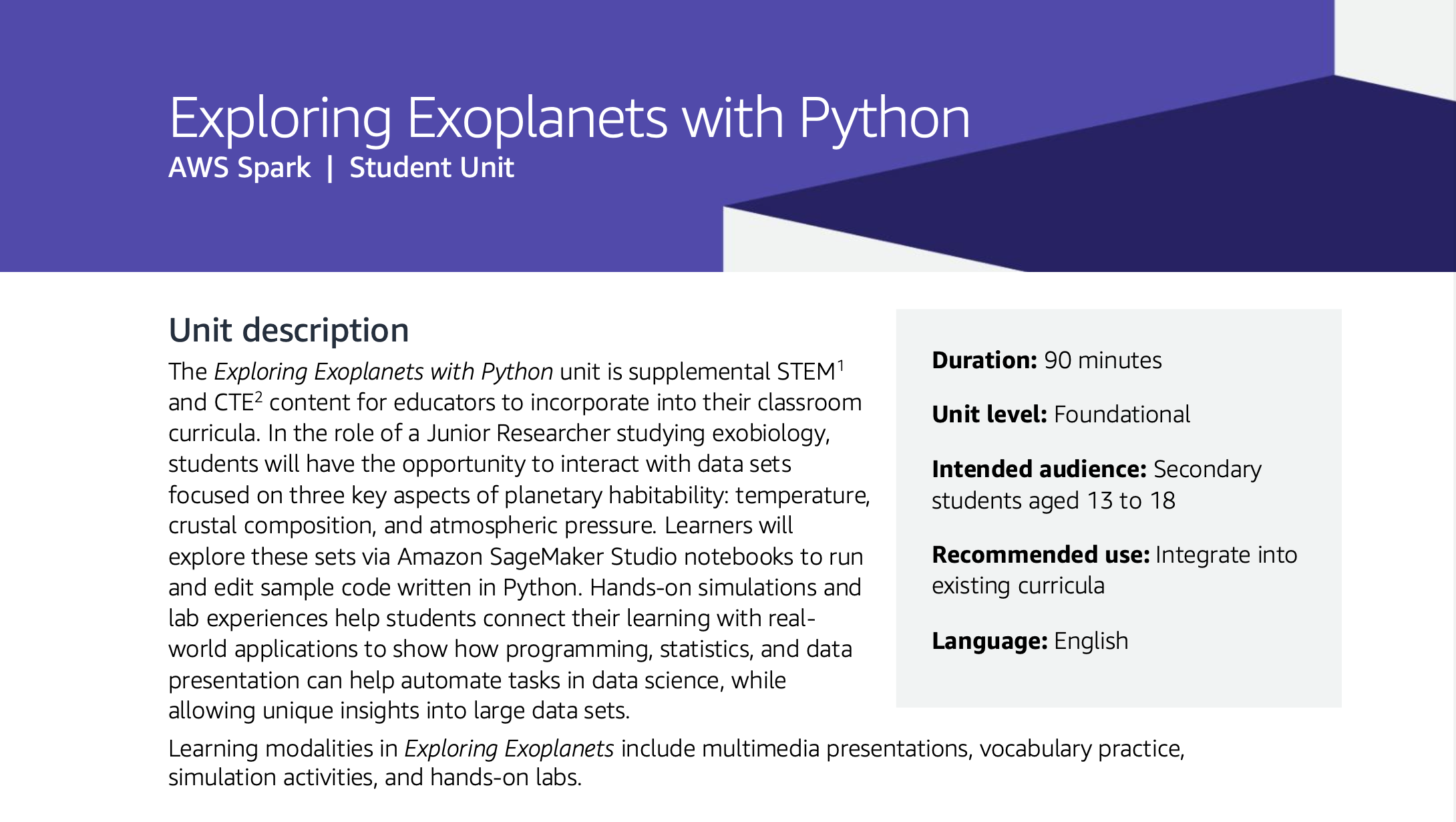
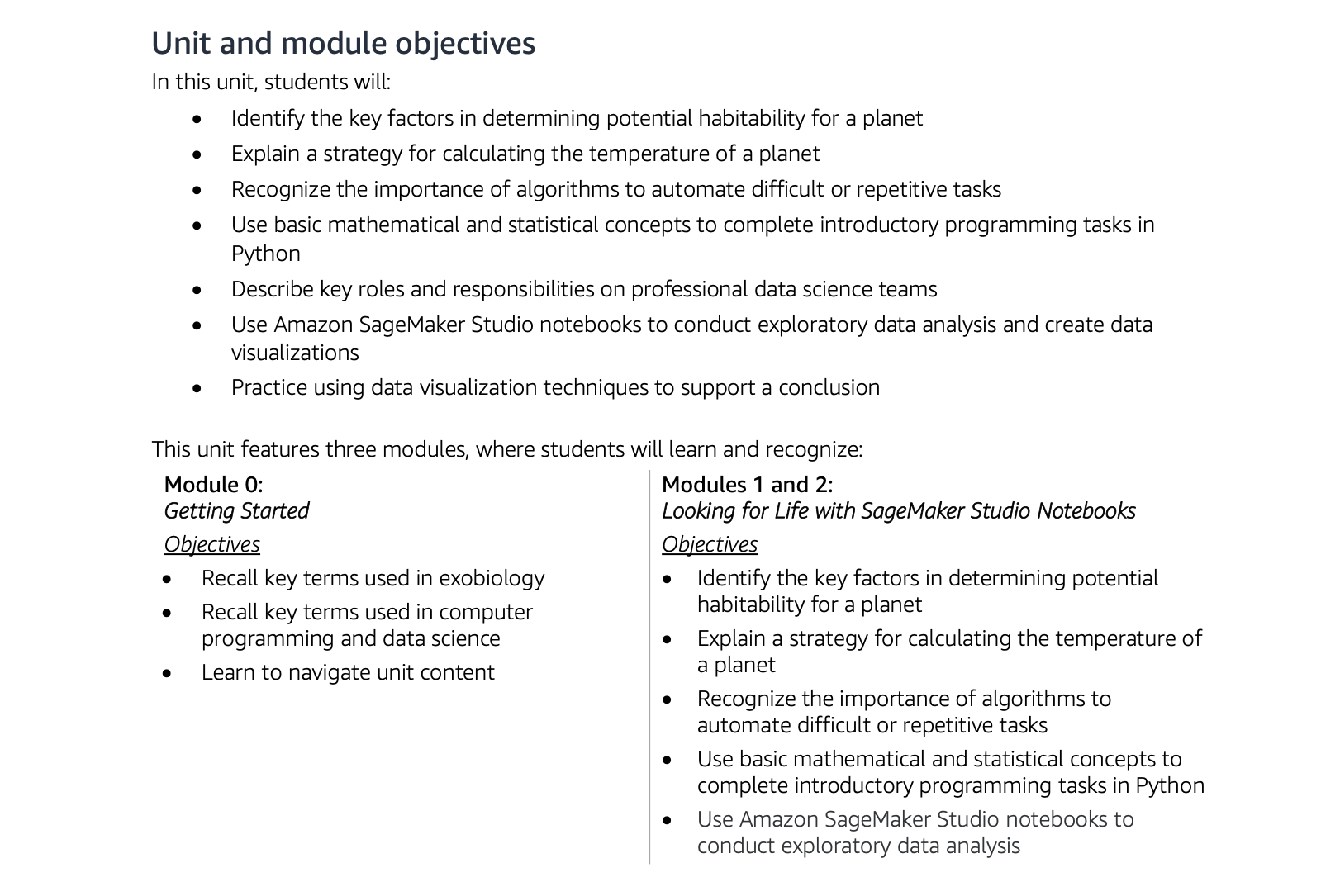
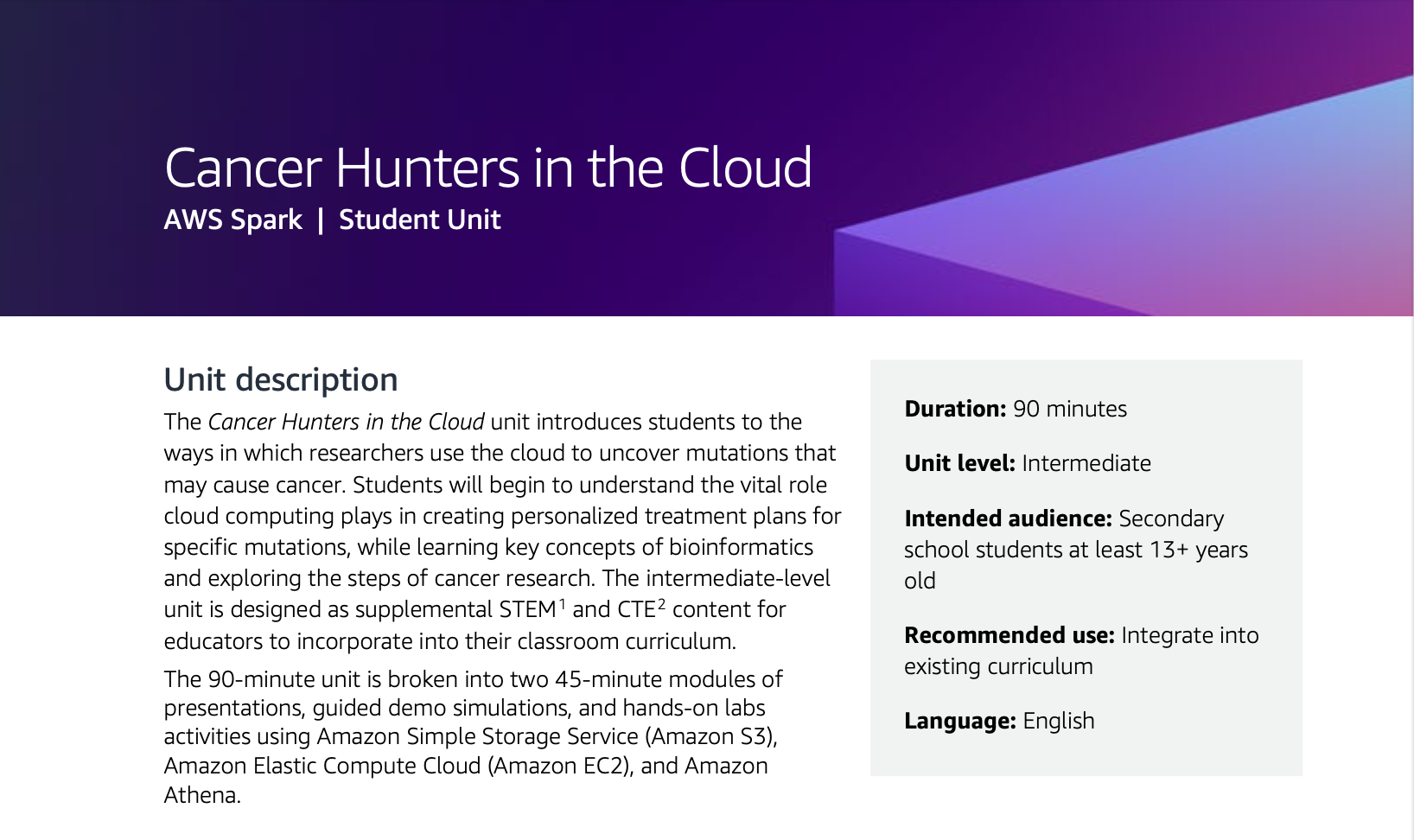
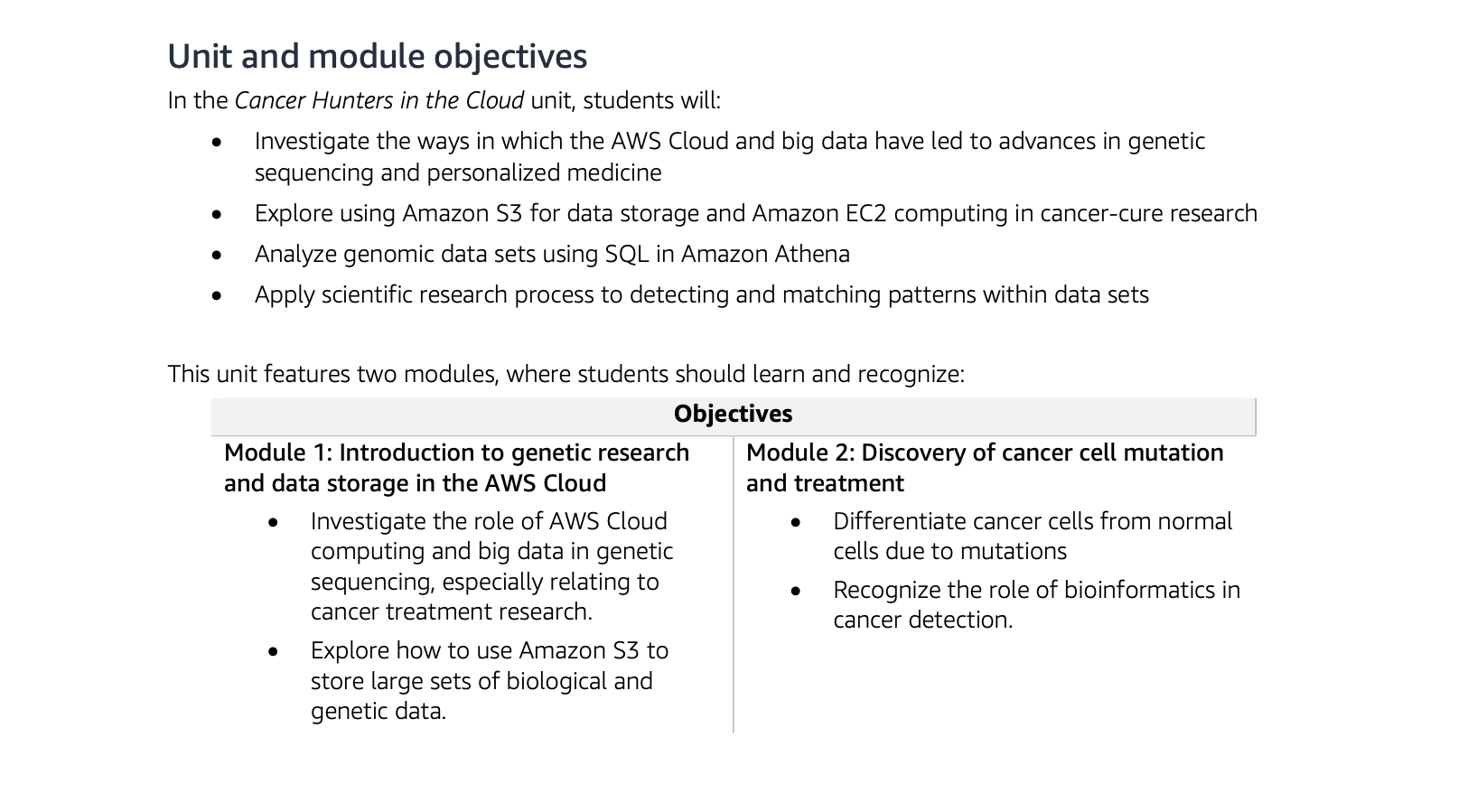
As the technical lead, when our team came up with a new rough concept for a unit, I would explore the technical feasibility. For example, we had the idea create a unit around sports and data- but how would we actually make that student accessible, easy for teachers, and fun?
I explored the real-world use cases of sports and AWS data tools, and came up with a way to pull in soccer data and automate it so that students could quickly get in to the real learning moments - without the hassle of standing up a bunch of tools.
Over the course of 3 years, I led the creation of 18 interactive labs for student learning. Initially, our team did not have any software development resources, so I started by building the labs on my own to stand the program up. In order to scale but with limited resources, I stood up a pipeline for early career Solution Architects to contribute to the technical labs of the program, enabling us to grow our curriculum and them to expand their skill sets and portfolios.